
Visions of Truth: The Use of Art in the Ministry of Spiritual Direction.
Reviewer: Gary L. Shultz Jr., Baptist University of Florida, Graceville, FL.
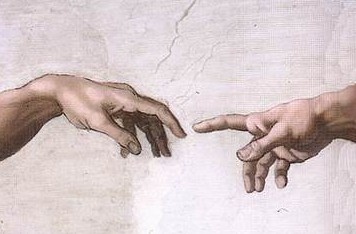
The first piece of art I purchased as an adult was a print of “The Hand of Man, Hand of God,” a portion of Michelangelo’s timeless work on the ceiling of the Sistine Chapel. When I saw it in a book for the first time, I studied it for several minutes, contemplating how the hands evoked God’s creative love, Adam’s desire for his creator, and how sin so severely impacted the relationship between God and humanity. I returned to that picture in that book several times over the next few weeks, until I finally purchased the print. I was privileged a few years ago to travel to Vatican City and see Michelangelo’s masterpiece in person, and I spent over half an hour
looking at it, worshipping the God who made us. Art has a way of speaking truth to us that words do not.
This unique role of art in augmenting our spiritual lives is what drove Mara Lief Crabtree, an associate professor of spiritual formation at the Regent University School of Divinity, to write this book, a resource for spiritual directors on why and how to use art in their ministries. Crabtree writes out of her own experience as a spiritual director, in which she discovered the unique power of art in deepening the faith of those to whom she ministered. Having experienced how the Holy Spirit can use art to help draw people closer to Christ, she decided to produce a textbook for those learning to do spiritual direction that would help them incorporate the use of art into their ministries, in a wise and biblical way.
Visions of Truth is divided into three sections of two chapters each. The first section is more general, offering a chapter on the ministry of spiritual direction, and then a chapter on the use of art in this ministry in general. This latter chapter is essentially a theology of art and its role in our relationship with God. The second section more specifically treats the role of art in spiritual direction, with a chapter on the use of art in Scripture, history, and contemporary life followed by a chapter on the use of art in discerning God’s presence and guidance. The last section is practical, with a chapter on how to support Christian formation with art followed by a chapter on how to appropriately use art in spiritual direction sessions.
Crabtree’s work is aimed primarily at spiritual directors, a specific ministry she defines as “companioning” others in their continued spiritual formation in Christ (6), a work that can be done vocationally or voluntarily. While her work is not specifically aimed at pastors or preachers (though aspects of pastoring are similar to the work of spiritual directors), it does have relevance for them. Her explanation of the use of art in spiritual formation is biblical, theological, and practical. She responds in a biblically sensitive way to every significant objection one might have against the use of art in ministry (e.g., concern over the use of images or replacing the written word of God with visual images), and continually stresses that art should support the ministry of God’s Word, never replace it. She is careful to consistently stress that art should be consciously understood and employed through a biblical lens. I was moved to consider how I might do more to encourage the contemplation of art as a spiritual practice in my preaching, as well as how I might better incorporate art into my illustrations while I preach. For any wondering how they might use art in a biblical way that supports and does not threaten the centrality of the Word of God in their ministries, this book is a helpful resource.